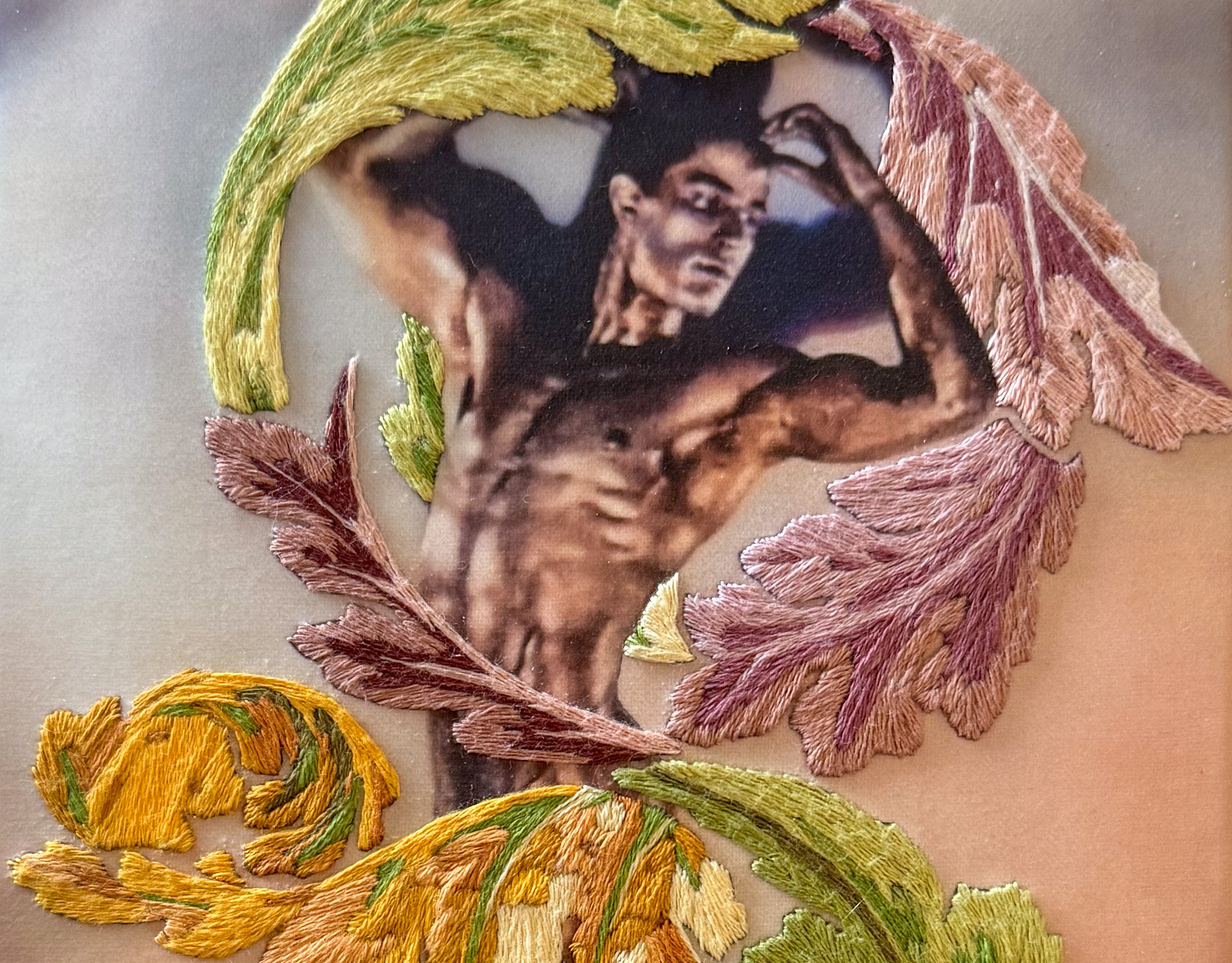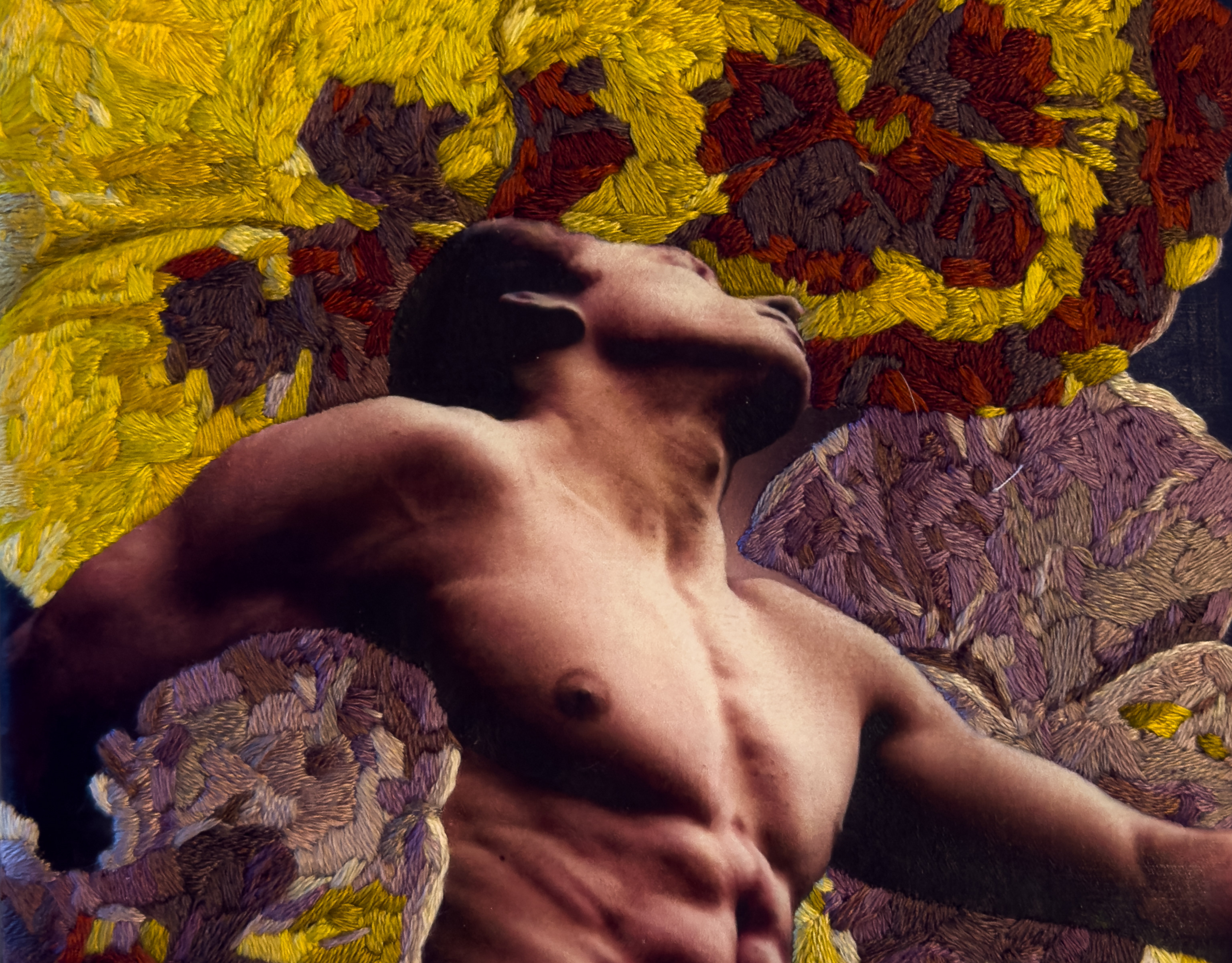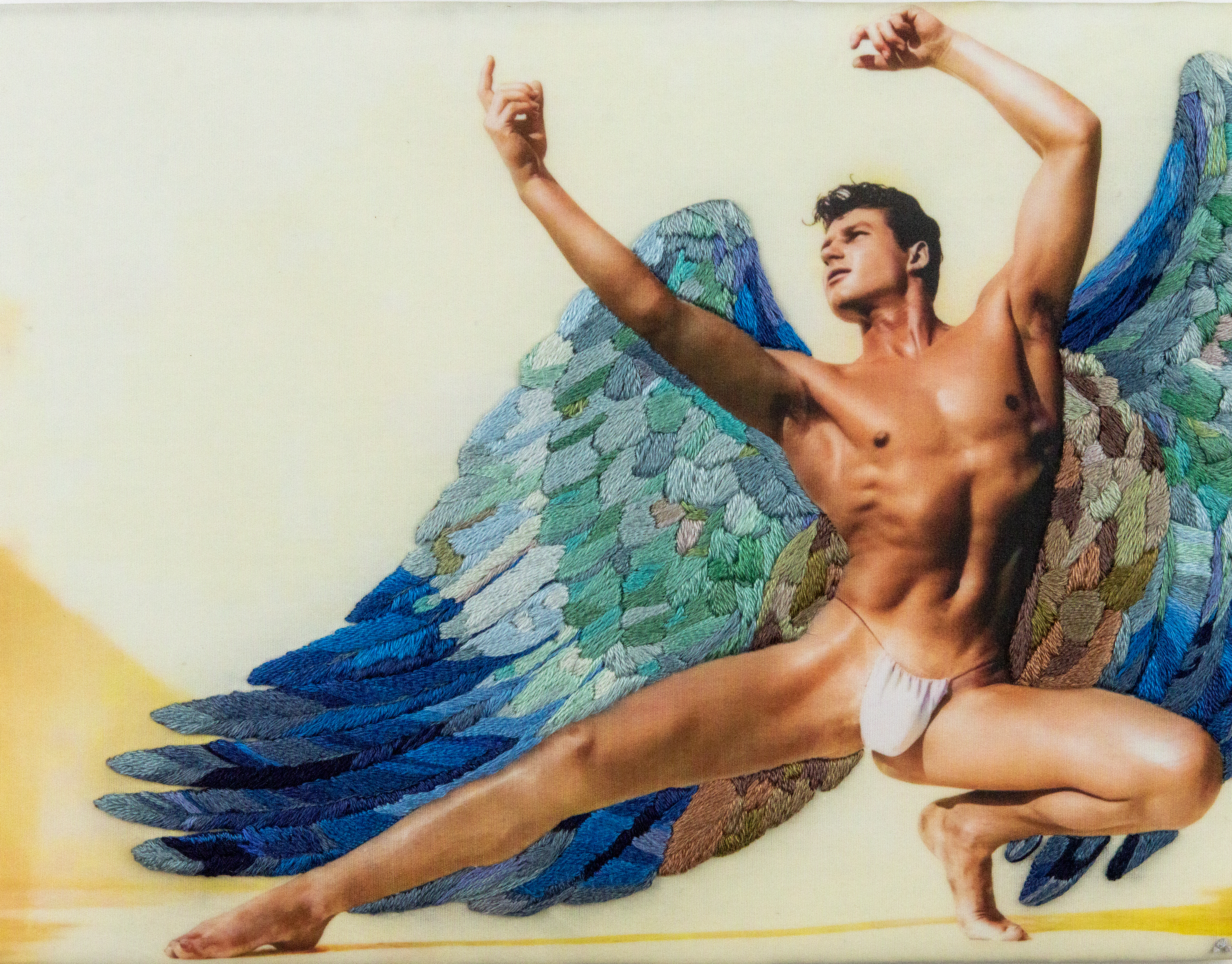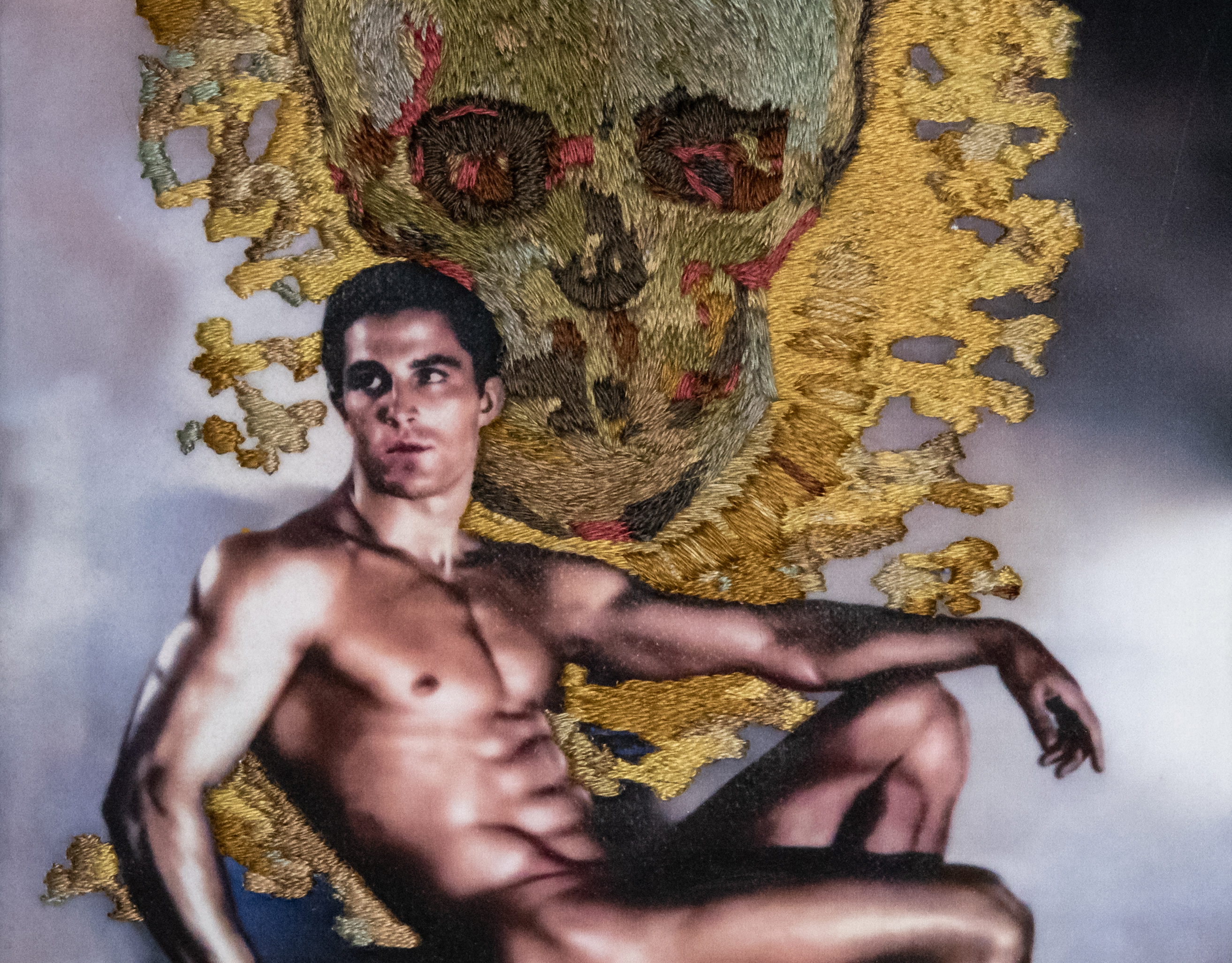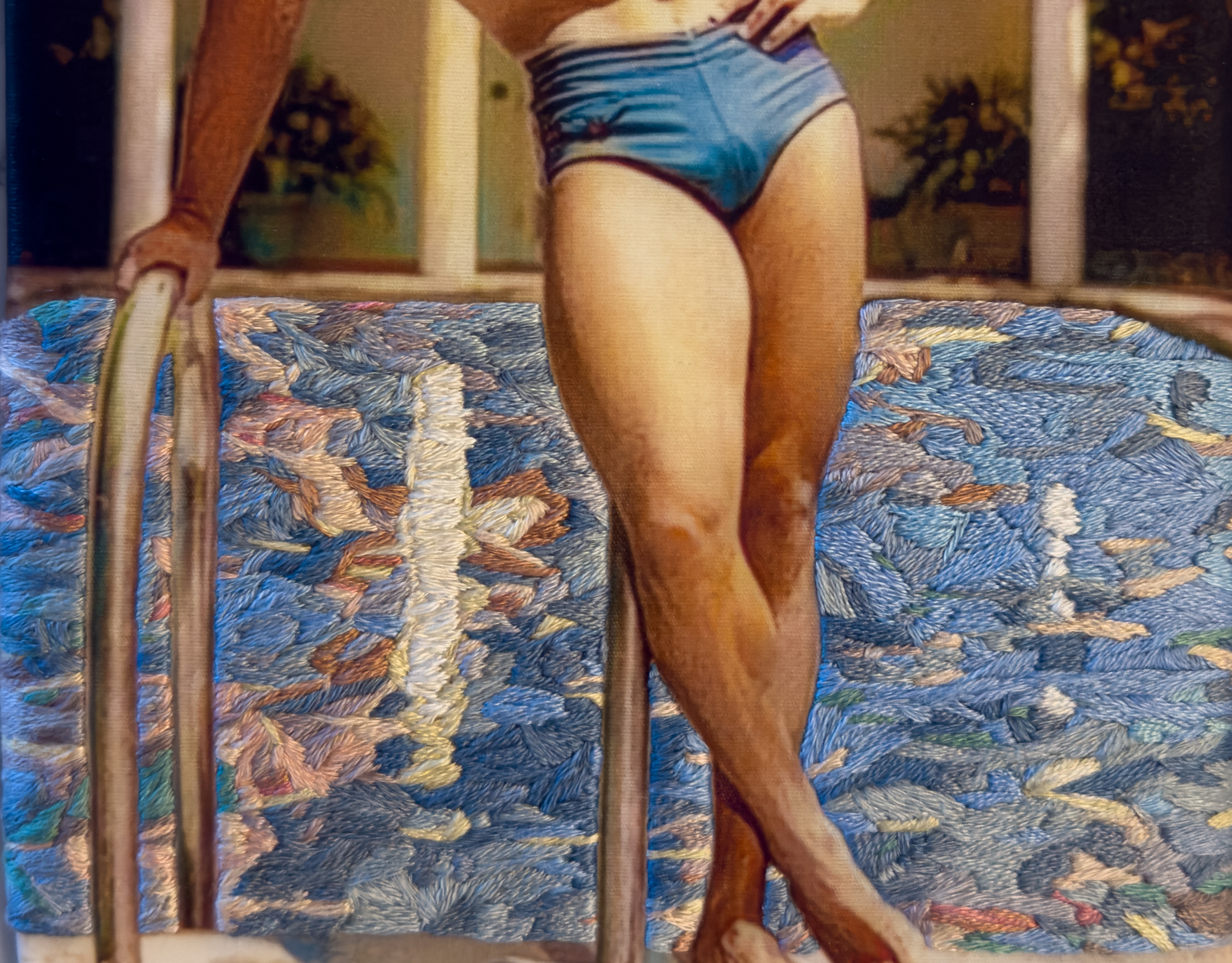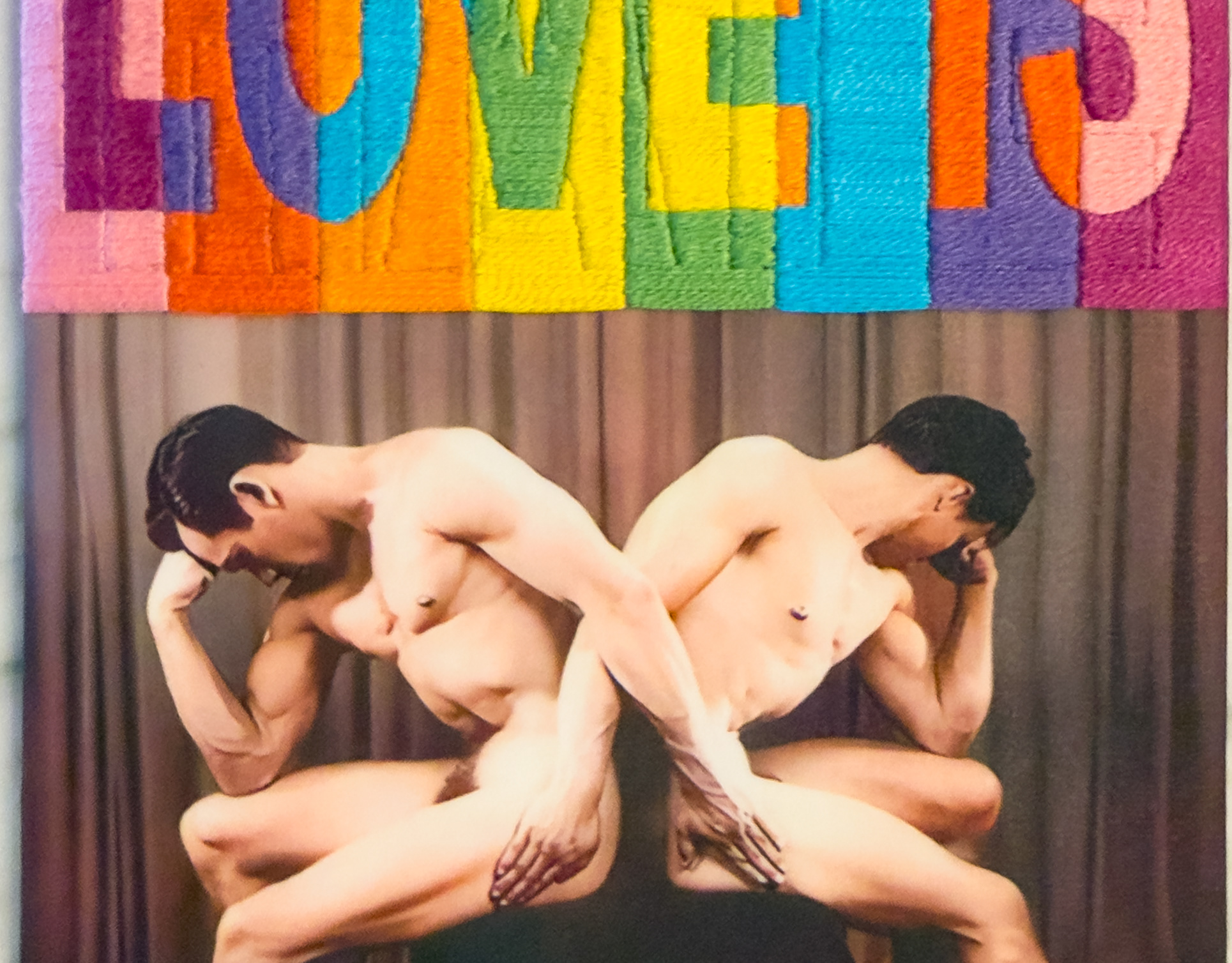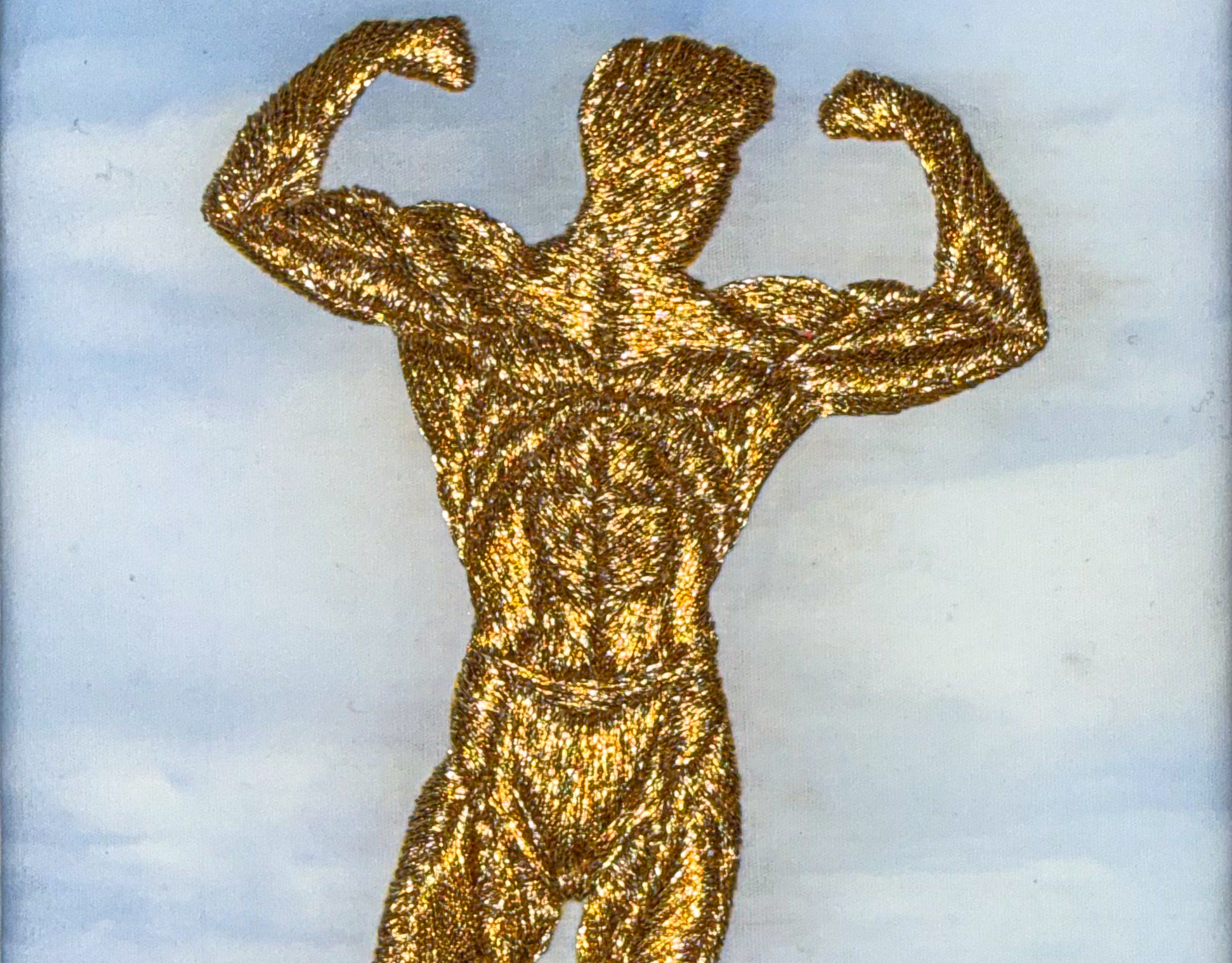
My current series uses embroidery on vintage physique photographs to reflect on queer visibility, desire, and memory in a moment when queer histories and rights are still contested. I source images from an era when queer lives were coded, censored, or relegated to the margins, and respond by stitching into the surface — adding colour, mark, and form that both protect and expose the men pictured.
The stitching is a deliberate act of care: it transforms shame into dignity, erasure into presence, and anonymity into something approaching tenderness. In this sense, the work is quietly activist — to look at these men with care rather than surveillance is itself a political act, one that challenges traditional notions of desire and masculinity. My artistic references include the sensory directness of David Hockney's pool paintings, the pattern and meaning layered in William Morris's textiles, and the erotic candour of C.P. Cavafy — work that finds beauty and desire without apology.
The embroidery slows the gaze; it insists on time, attention, and care. In a world that still legislates queer lives, these pieces invite viewers to recognise themselves or their communities in anonymous men whose names may never have been recorded, and to see Pride not only as celebration but as an act of remembering — and honouring — those left out of the official record.
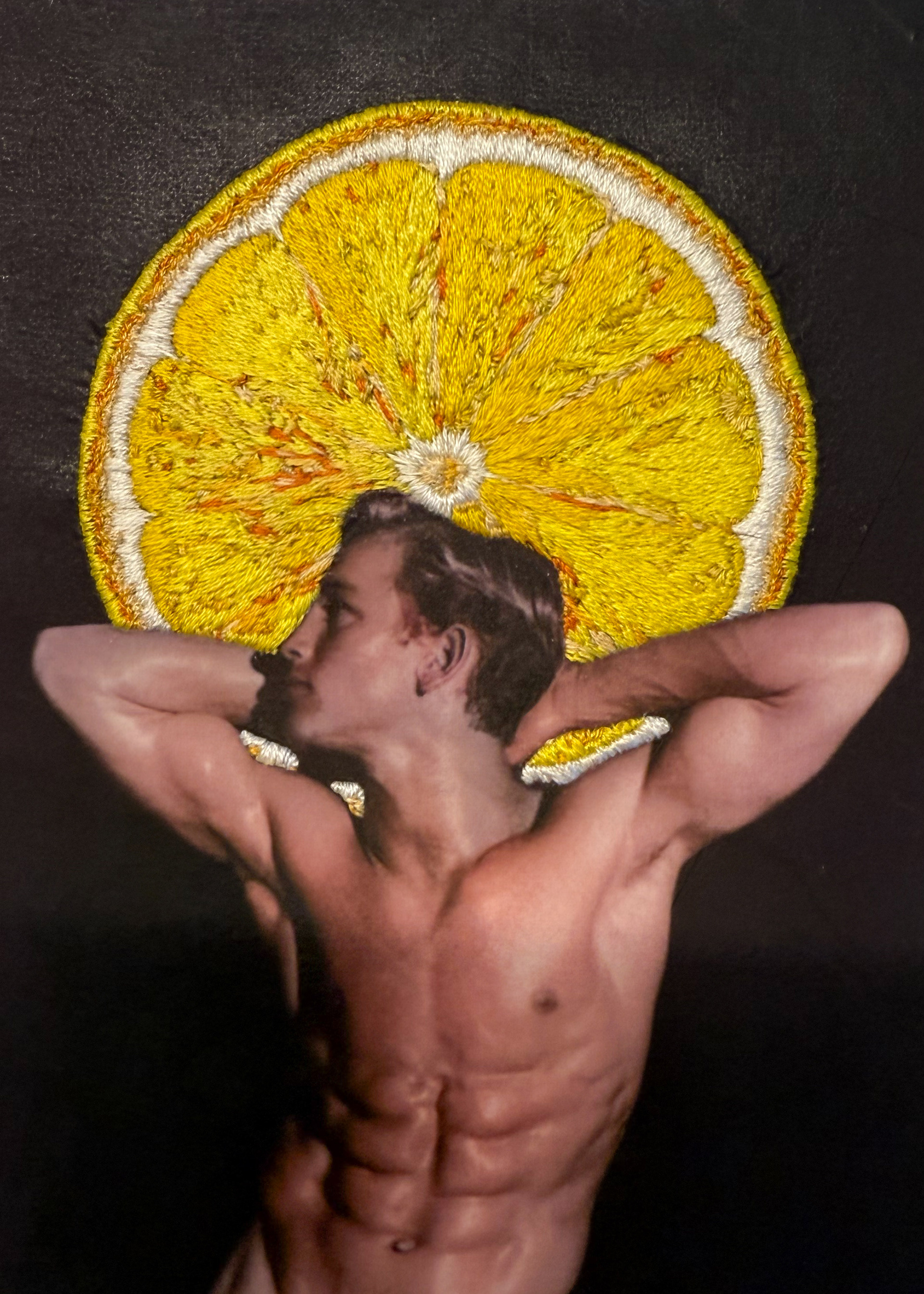
This is Queer history doing what it does best: taking what was used against us and turning it into a crown.
Paul Gravett merges a mid-century physique photograph with delicate embroidery—soft labor stitched into hard nostalgia—so the image becomes more than an object. It becomes an argument. A reclamation. A little altar.
Look closely: a lemon slice rests behind the model’s head. It’s a sly, devastating emblem. “Fruit,” once a slur, is rerouted into something else entirely—because that circle also reads as a halo. Insult and reverence held in the same frame. That’s not decoration. That’s survival with style.
The pose carries its own charge: a body offered and defended at once, recalling St. Sebastian in Renaissance painting—sensuality braided with vulnerability, suffering, and sanctity. The piece doesn’t sanitize Queer desire; it dignifies it. It says: we have always been here, and our beauty was never a crime—only somebody else’s fear.
For the record (because archives matter): the model is John Miller. The original photograph was taken by Bob Mizer and appeared in Athletic Model Guild magazine in the 1940s. Queer history isn’t abstract. It has names. It has sources. It has receipts.
By Michael Swank
Found and Director, The Bureau of Queer Art (link)
Found and Director, The Bureau of Queer Art (link)